Friday, 18 September 2015

The Circus


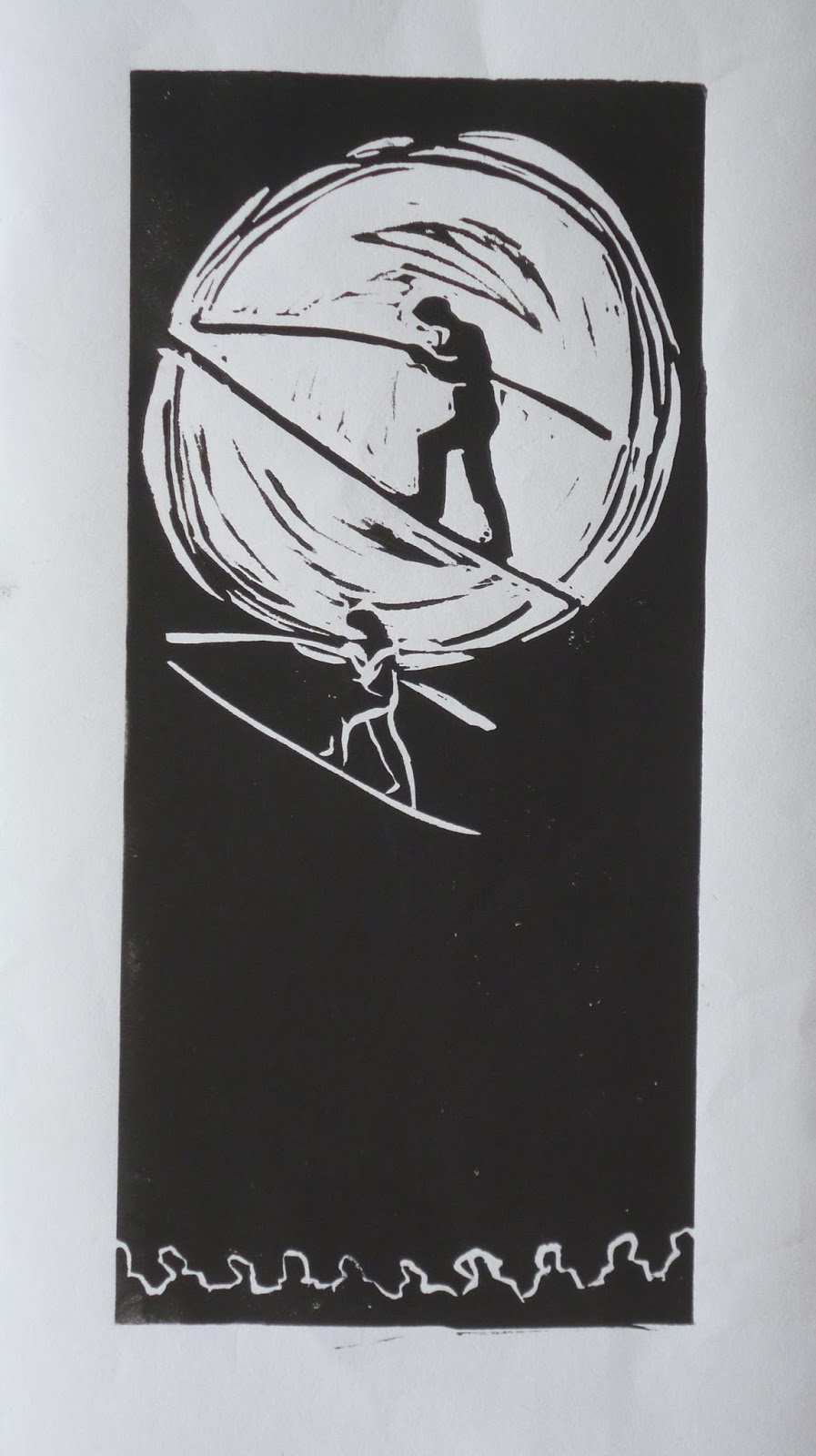
For as long as I can remember I have been a regular attender of the circus. The childhood experience involved lots of performing animals; lions, tigers, elephants, horses, dogs  and  even  zebras ,  complemented by the clowns and illuminated with trapeze artists and acrobats . Nowadays the animals have been excluded   from   performances   but  there  are still plenty of circus performers of the human variety.

Back in the mid-70s I spent a summer in Paris  staying with RCA student friends  and we regularly visited the circus school ' Nouveau Carre'  Cirque Gruss  at the Square  Emile-Chautemps';  to draw the performers in action.


Since the early 90s I have regularly revisited the travelling circus when they have come to Plymouth Hoe and Central Park,  ostensibly  to introduce my young son to the joys of the 'Big Top' but more truthfully to satisfy my own interest.  This fascination with the circus has continued to pull me back to observe and draw the action and atmosphere of the' Big Top'. Scribbling away in the semi-darkness, often trying to respond to the movement without looking at the pages of the sketchbook  until  the lights came back on and then wondering if the marks I had made conveyed any recognisable meaning.


Over many years my circus sketchbook has gradually filled up but I was uncertain how to make use of the drawings  until in the summer of 2014 I visited Plymouth Art Gallery  to see a show entitled 'Four Printers' , featuring  Matisse, Dali, Wharhol and Picasso. 


Among Picasso's work I came across two black and white  lino prints, one of a bull fight and one of a circus. It seemed only natural  to follow in the footsteps of the master and transcribe my black/white sketches  into print form.


Experimenting with the lino offered the drawings a new life of their own, dictated by the medium and opened the door to further  possibilities of tonal paintings.

Tuesday, 28 April 2015

Spring paintings & Delamore Arts 2015

Looking again at significant marks in the area of Plymouth Sound, I recollected the first time that I sailed close to and between the breakwater and the fort. It seemed an ominous and powerful experience, the bulky, dark strength of the stone fort structure closely pinned in by the long. linear stretch of the encroaching low breakwater wall. I went back recently to observe the features in more detail in the hope that I might convey my initial sensations in painterly form.


A couple of years ago I focused in on the Mallard Shoal Beacon, not far from the Hoe foreshore, as a visual subject for painting. There was something aesthetically poignant in its form which led me to consider producing a series of images based on the other white beacons which surround the waters of the Sound. Withyhedge, near Jennycliff and Tinside below the old aquarium on the water-front offered the readiest access and after taking photographs, exploring sketch-book experiments I opted to begin my efforts with a depiction of the Tinside beacon, a cables length distance from the Mallard Beacon.


One year ago I produced a mixed media image, combining painting and lino-print, to portray Lizard Point, employing a scaled up study of an admiralty chart to define the coastal outline,  sea contour depth markings and hazard warnings. This formed a backdrop for over-painting with imagery to suggest the wild and perilous waters that break on its submerged rocks while rolling towards the craggy shore. Recently I decided to revisit the topic but on a slightly larger scale and using my re-cycled Kevlar sail cloth.


Sunday, 22 February 2015

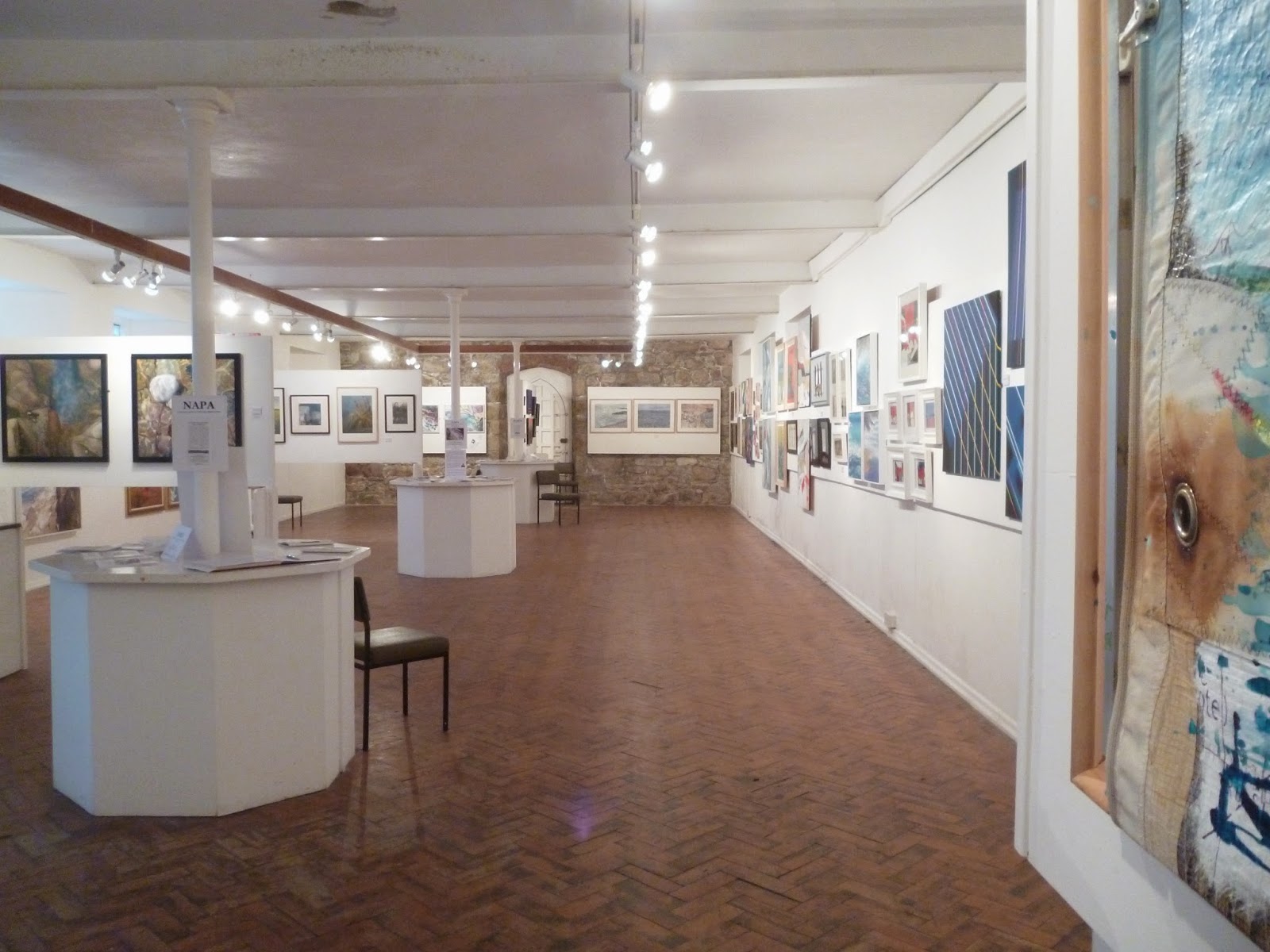
National Acrylic Painters Association Exhibition Crypt Gallery St. Ives Nov 2014

November 2014
St. Ives
Crypt Gallery
National Acrylic Painters Association exhibition

Exhibited 6 paintings as part of a display of 124 art works on show.
Elicited an engaged response from the viewing  public with offers made for two paintings and was awarded a prize for creative use of media by independent judgement.

I always find that a mixed exhibition allows the opportunity to reflect, consider and compare my work in relation to the whole range of paintings grouped together.